Ase coin collectors do not treat 2026 like a routine Silver Eagle year. The date carries two built-in hooks. It is tied to the nation’s semiquincentennial, and it lands in the 40th year of the Silver Eagle series that began in 1986. That alone makes the issue harder to ignore than a normal annual release.
That does not settle the bigger question. Some modern coins get attention only during the launch window. Others stay important because the year, format, or design becomes hard to skip in a real collection. The 2026 ASE sits right in that argument.
Why 2026 Feels Different
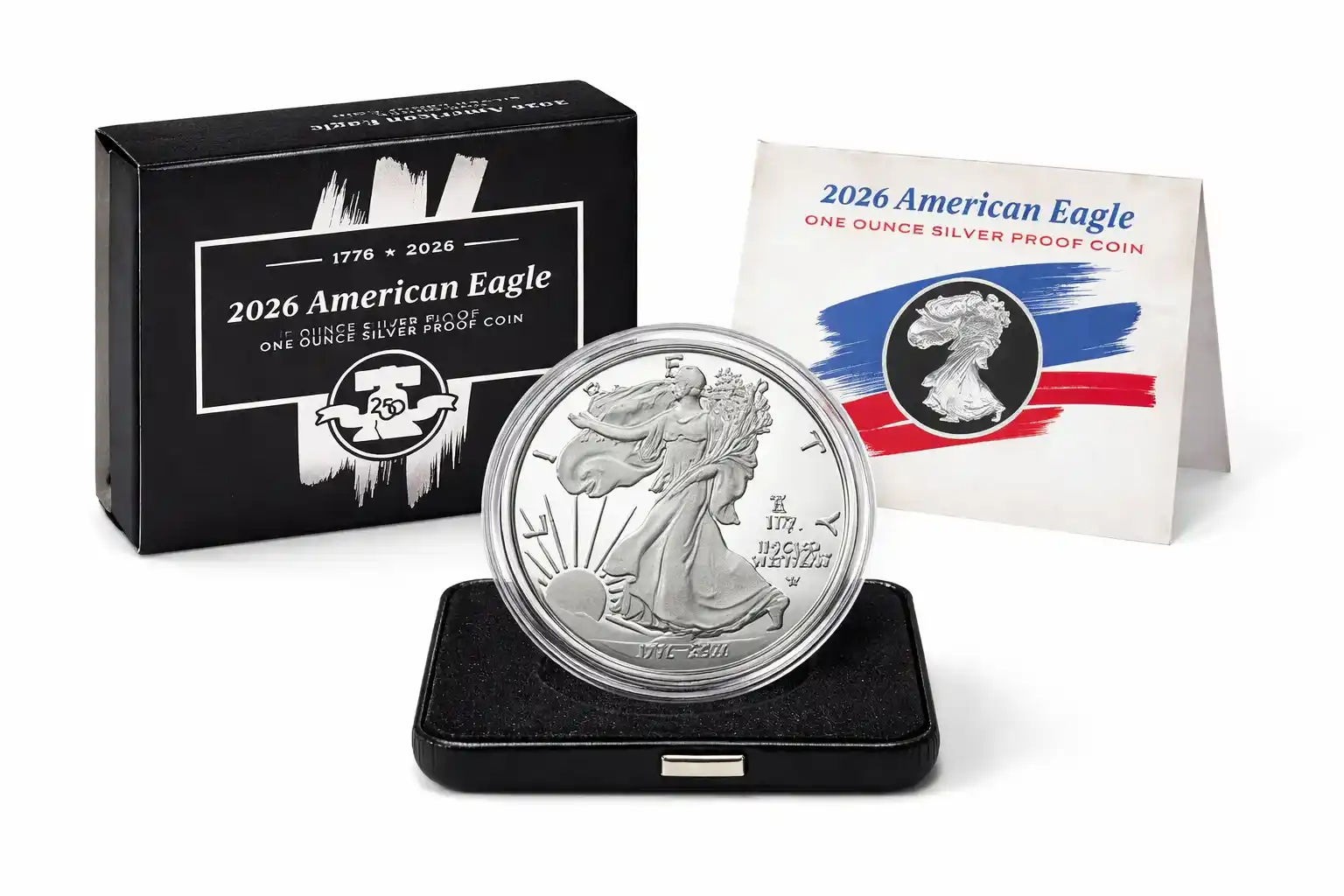
The 2026 proof issue is not just another date. The West Point proof carries the dual date “1776 ~ 2026” and a Liberty Bell privy mark with the numeral “250.” Those are one-year markers. They do not need a long explanation. A collector can see them in seconds.
The series context matters too. The Silver Eagle started in 1986. In 2021, the coin moved into the current Type 2 era with the landing eagle reverse. So 2026 is not only a patriotic anniversary year. It is also a date that sits well inside a major design era of the series.
That combination gives 2026 a real collector case. It has a visible one-year identity. It has anniversary appeal. It also fits into a long, heavily collected modern U.S. series.
What “ASE” Means in Practice
Collectors use “ASE” loosely. That causes confusion.
Some people mean the bullion Silver Eagle. Others mean the collector versions. Those are not the same thing. Bullion pieces are metal-driven. Collector pieces are more sensitive to finish, mintmark, mintage, packaging, and one-year design features. The Mint itself separates bullion from collector products, and it does not sell bullion coins directly to the public.
That matters here because the 2026 story is mainly a collector story. A person buying a tube of bullion and a person building a date-and-format set are not asking the same question.
Not Every 2026 ASE Is the Same
This is the first place where many articles become too loose. “The 2026 Silver Eagle” sounds singular. It is not.
Below is the practical breakdown.
| Issue | Mint Mark | Finish | One-Year Markers | Mintage Limit |
| West Point Proof | W | Proof | Dual Date, Liberty Bell Privy | 500,000 |
| Congratulations Set Coin | P | Proof | No Privy, Standard 2026 Date | 60,000 |
| Enhanced Uncirculated Issue | Not yet listed on product page | Enhanced Uncirculated | Not yet fully detailed on product page | 125,000 |
The West Point proof is the headline coin. It has the strongest visual identity and the clearest 2026-only profile. The Philadelphia proof inside the Congratulations Set is different. It is a proof ASE with a “P” mintmark, but the Mint lists no privy mark for that coin. The enhanced uncirculated issue is a third lane altogether, with a listed mintage limit of 125,000 and a summer 2026 release window on the Mint’s subscription page.
That split is important. A collector may love the W proof and still ignore the P proof. Another may chase the lower-mintage set coin first. A third may wait for the enhanced uncirculated version because modern collectors often watch those lower-output specialty finishes closely.
Why The West Point Proof Gets Most of the Attention
The case is simple. It is easy to recognize. The dual date stands out. The Liberty Bell privy stands out. The coin is tied directly to the 250th anniversary theme. That gives it a visual and historical identity beyond normal annual proof issues.
It also has the collector format that most people understand immediately. Proof ASEs already have a long audience. Adding one-year markers to that format makes the coin easier to remember later.
That does not automatically make it scarce. The Mint lists a 500,000 mintage limit for the West Point proof. That is not tiny by modern collector standards. So the “key date” case cannot rely on low output alone. It has to rely more on identity, visibility, and set importance.
The Philadelphia Proof Has a Different Case
The Congratulations Set coin is quieter. It has a “P” mintmark. It is still a 2026 proof Silver Eagle. But the Mint lists no privy mark, and the obverse uses the standard “2026” date rather than the dual date.
That sounds like a downgrade at first. It may not be. The set coin has a much lower listed mintage limit of 60,000. That does not guarantee stronger long-term demand, but it gives the piece a different path. Instead of living off the semiquincentennial look, it may appeal more to mintmark collectors, set builders, and buyers who chase lower-output modern issues.
This is why 2026 should not be treated as one flat story. The West Point proof is the visual star. The Philadelphia proof may be the sleeper issue. Those are different roles.
Does 2026 Deserve the “Key Date” Label?
That label should be used carefully.
In classic series, a key date usually points to real scarcity. In modern series, the idea can work differently. A key date may be the year that collectors remember first, the one they feel they cannot skip, or the one that defines a design era or anniversary moment.
By that standard, 2026 has a real argument.
The positive case looks like this:
- One-year markers are strong
- The series context is strong
- Collector awareness is already strong
- Multiple formats give the year depth
Still, the case is not finished. Long-term importance takes time. A year can look huge at release and settle down later. Modern coins often cool after the first rush. What survives is not launch noise. What survives is set pressure, visual identity, and steady demand across different buyer groups.
So the better answer is this: 2026 already looks like a standout year. It may become a key date. It is too early to call that final.
How Much of This Is Hype?
Some of it is hype. That is normal.
Modern Mint releases often get a strong launch wave. Buyers focus on product pages, first-day grading, label options, and quick resale windows. That kind of attention is real, but it does not always last. A collector should separate short-term launch behavior from durable series importance.
The 2026 ASE has more substance than a typical hype cycle because the year has real built-in meaning. It is not just a random special label or a small packaging tweak. The dual date and privy are part of the coin itself. The year also sits at a major national anniversary point. That gives the issue a better chance to hold attention after the first rush fades.
Still, one rule holds. Not every premium survives. The market may keep one 2026 version hot and let another cool. That is exactly why collectors should watch the separate formats, not just the headline year.
What Collectors Should Watch
Collectors looking for the best coin identifier app often focus on quick recognition. With a year like 2026, that is not the hard part. The harder part is keeping the versions straight and understanding why one format matters more than another.
Focus on these points first:
- Which issue are you buying
- Mint mark
- Finish
- Privy status
- Dual date or standard date
- Set placement
- Mintage limit
- Long-term role in a full ASE set
This list matters more than early excitement. It is the difference between buying “a 2026 ASE” and buying the right 2026 ASE for your actual collecting goal.
Organizing the 2026 Issues Properly
This is also the type of year where cataloging matters. A collector who tracks modern issues by finish, mintmark, and one-year features can lose the point of the year if everything gets saved as one generic Silver Eagle entry.
That is one place where Coin ID Scanner fits naturally. Its smart filters, structured coin cards, and detailed spec fields make it easier to separate close modern releases by metal, weight, diameter, edge, and issue type, and the built-in AI Coin Helper is useful when a collector wants to check a quick detail without breaking the workflow. That matters more in a split year like 2026 than in a common-date bullion year.
Which 2026 Buyer Are You?
This question keeps the whole topic practical.
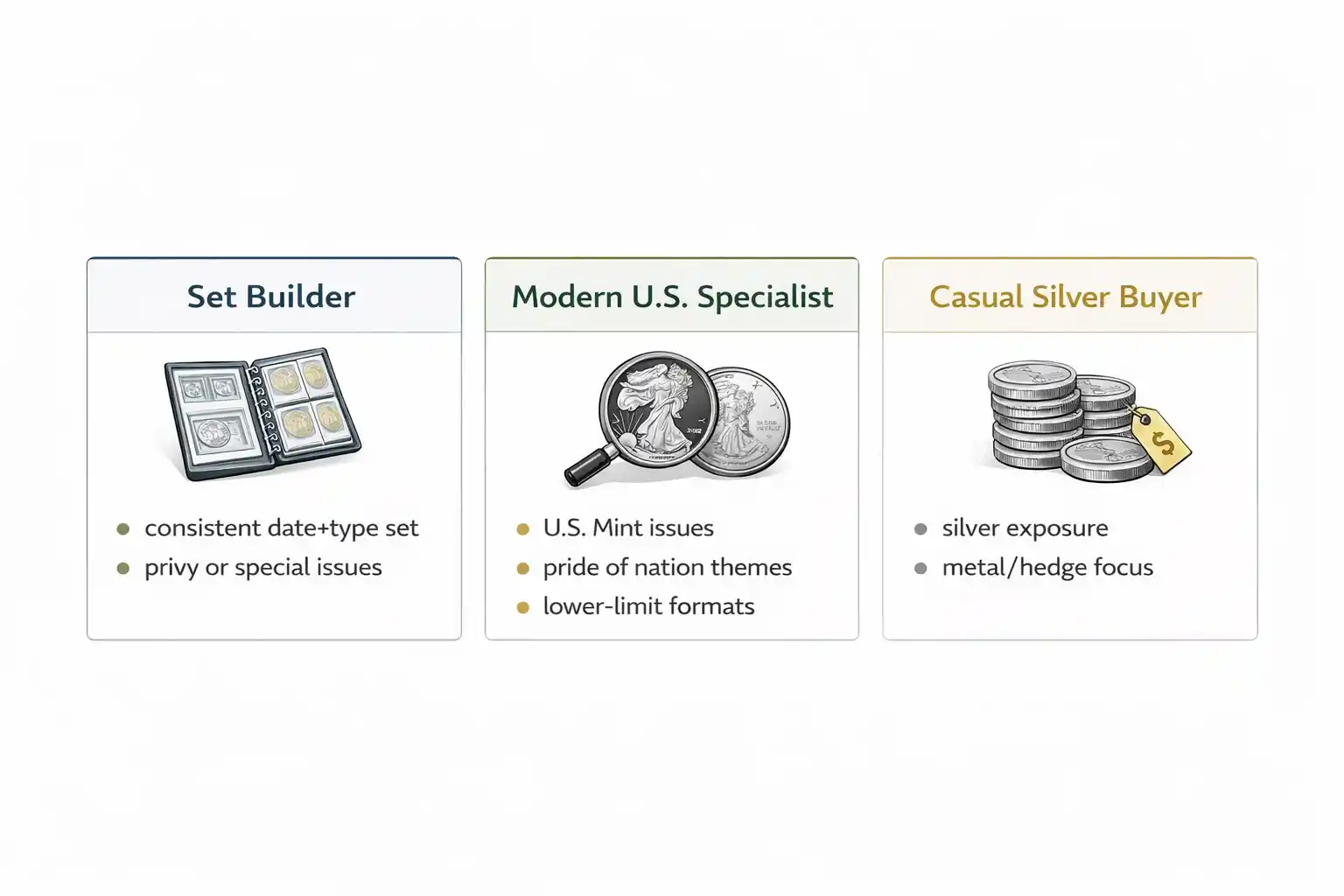
The Set Builder
For a date-and-format collector, 2026 is hard to ignore. Too many one-year details are packed into the year. Skipping it would leave a visible gap.
The Modern U.S. Specialist
This buyer may care less about hype and more about which version holds its place better later. For that person, the W proof and the P proof may compete for attention in different ways.
The Privy And One-Year Marker Buyer
This collector is drawn to visible identity. The West Point proof is the obvious target because the dual date and Liberty Bell privy do the work instantly.
The Casual Silver Buyer
This buyer should stay careful. Not every special ASE becomes a long-term winner in the same way. If the goal is silver exposure first, the collector premiums on special proof issues may not fit the purpose.
Key Date, Hype, or Long-Term Keeper?
The cleanest answer is mixed.
2026 is not just noise. The year has real collector substance. The West Point proof has strong one-year markers. The Philadelphia proof adds a second, lower-limit proof path. The enhanced uncirculated issue gives the year another specialist lane. That is more than a standard annual release offers.
It is also fair to say that the final pecking order is not settled yet. The long-term favorite may be the obvious coin, or it may be the quieter one with the lower limit. That part still needs time.
So the best conclusion is practical. The 2026 American Silver Eagle already looks like a standout year. It has enough identity to stay relevant. It has enough variation to reward close attention. The real question is no longer whether 2026 matters. The better question is which 2026 issue collectors will care about most five years from now.